Category Archive News

Where to go to get away from it all?

Go Get Away

Sometimes you want to go where everybody knows your name.
At others, you want to get away from it all. So where do you go to get away from it all?

Easter Island
Easter Island

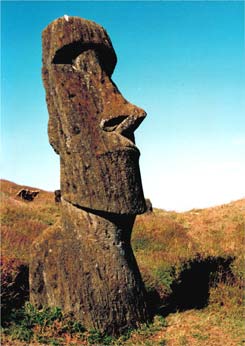
Easter Island is a drop in the middle of the Pacific Ocean. It is 3600km from Chile mainland and 4200km from Tahiti. This makes it possibly the most remote spots in the world. Not only that, it is a remarkable land where most things are imported and is one of the most amazing and famous archaeological sites in the world. Due to its remoteness it also offers an attitude of ingenuity. When I was there I saw a car that was made almost entirely from wood. It is a fascination for history buffs and underwater vulcanologists alike. Getting there is by plane from Tahiti or Chile.

Antarctica
Antarctica

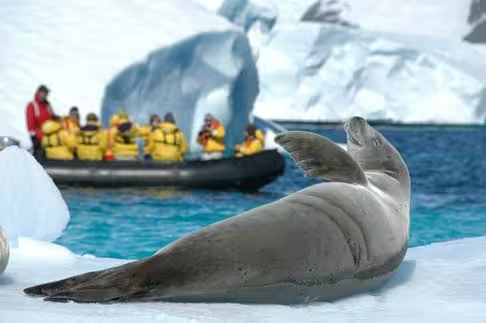
The Antarctic is one of the most pure places in the world. With an almost insignificant amount of pollution compared to anywhere else in the world, it is a remarkable place. However, it is the wildlife experiences that make it unique. Whilst the penguin populations and the accompanying smell can be overwhelming, it is the encounters with seals and whales that will be found in few other places in the world. Whilst kayaking I was fortunate to watch as three humpback whales swam under my kayak, eyeing me as they did. Getting there is normally by a 24 hour+ cruise or research vessel from Australia, New Zealand, Argentina or Chile.

Madagascar

Madagascar

Imagine a place where the language spoken is the incomprehensible Malagasy, you get off the small minibus for a meal break in a town with only dirt roads and less than half a dozen buildings. You enter the only restaurant and you are given a choice fish or chicken – that’s it. When you get back on the minibus, you tread on a live chicken that someone has moved to the space where your feet went before you stepped off the bus. It is hot and humid, Africa hot and humid. The radio starts playing a song in French about the snow falling. The bus continues and we weave our way around the pot holes that overwhelm the road. The rain starts to inundate the road until the driver pulls to the side every so often when he can no longer see. It is pitch black apart from the lights from our vehicle. We spot some lights ahead. Men slept under shelters constructed of palm leaves with their heads dozing on tables lit by kerosene lamps. Getting there is via Africa or Mauritius.

Rurrenabaque, Bolivia
Bolivia

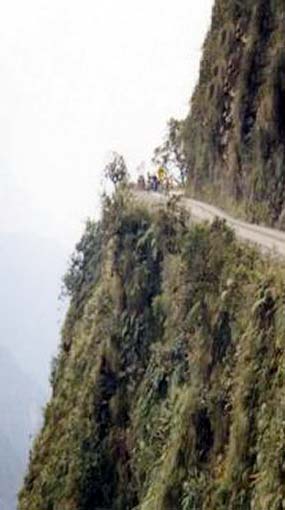
From La Paz at 6000 metres, I quickly descended “Death Highway”, where little crosses marked the roadside where a 300 metre drop had taken people’s lives. On the other side, a steep cliff rose to the heaven. Truck tyres often slipped over the side. At one point I shared the back of an open truck with a local who had contracted malaria more than 20 times. From the back of the truck, we had 360 degree views that included glaciers and rainforests, sometimes at the same time. The trucks headlights did not work and we limped our way to Rurrenabaque under the light of the full moon. Once there, the wildlife was amazing with swarms of king parrots and monkeys chuckling in the trees. However, trying to get out was a little more difficult. I had a week to get back to Sydney. The only two ways out were via a military airline that crash landed the day before or back up the “Death Highway”. Getting there is by normally by plane via North or South America and then a 2+ day drive or a flight on a military airline.

Okapi Park, Democratic Republic of Congo
Congo

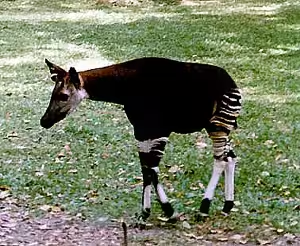
Imagine an animal that looks like a cross between a giraffe and a zebra? Well you’ve probably never heard of an okapi. However, it really does exist in Zaire (now Congo). You want to trade empty containers for food or see some of the biggest populations of hippopotamus, Congo is your getaway place. Getting there is via a flight from South Africa or Kenya to Kisangani and then a 5 hour overland drive to the park.

How to I determine the best travel towel?

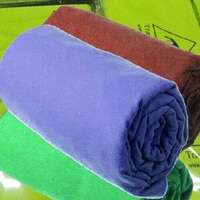
The Travel Ideology Travel Towel is engineered specifically for the demanding realities of long-term travel, outperforming standard microfibre towels on every level. Significant research, testing, and refinement have gone into eliminating the flaws of ordinary travel towels to deliver the absolute best microfibre product available. While built for the rigours of life on the road, its premium performance also makes it an excellent high-end addition for your daily gym sessions.

When you compete on quality first, every single detail matters. Here is exactly why Travel Ideology stands alone as the world’s best travel towel.

The Ultimate Microfibre Quality Test

Most microfibre towels look identical online, but they fail quickly under the stress of continuous travel.

  • The Zero-Light Stretch Test: Lower-quality microfibre thins out significantly when pulled, showing cheap pinpricks of light through the fabric. The Travel Ideology towel utilizes an ultra-dense, premium knit that remains completely opaque under tension, proving its superior weave density.
  • Fray-Proof Borders: While competitors rely on cheap heat-sealed edges or loose threading that unravels after a few washes, our towels feature industrial-grade perimeter lock-stitching built to endure rugged, long-term travel.
  • Weight vs. Absorbency: Unlike brands that reduce towel thickness—and therefore absorbency—to save minor amounts of weight, Travel Ideology prioritises premium absorbency to ensure optimal performance when you need it most.
  • The Feel of Quality: Unlike lower-quality alternatives that mimic traditional, soft plush bath towels, the Travel Ideology range features a premium, ultra-thin, suede-like texture engineered specifically for efficient travel.
  • GSM Rating: A high GSM means a denser more absorbent towel. At Travel Ideology, your travel towel comes in 4 handy sizes
    • Small 40 x 40 cm (no mesh bag)                             60g
    • Medium 55 x 110cm (no mesh bag)                       140g
    • Large 80 x 130cm (with mesh bag)                        280g (without mesh bag)
    • Extra Large 90 x 180cm (with mesh bag)              360g (without mesh bag)
What these figures mean is that the GSM rating is above the 200gsm that is considered excellent by others.

Optimized 80/20 Fabric Architecture

The secret to true microfibre performance lies in the precise blend of polyester and polyamide.

  • The Golden Ratio: Many brands use cheap fillers or improper ratios that feel like cardboard against the skin and quickly lose absorbency. Travel Ideology uses the precise 80% polyester and 20% polyamide split.
  • Shape Retention: This exact engineering ensures your towel retains maximum capillary suction for rapid drying, maintains its featherlight packability, and never shrinks, sags, or loses its shape over time.

Safe, Long-Lasting Hygiene Infusion

Standard microfibre is notorious for trapping bacteria, causing towels to develop a foul, musty smell after just one use in humid climates or damp bags.

Tailored Sizing for Every Need

Whether you are counting every single gram in your backpack or looking for full coverage, we offer the perfect size variant for your journey.

  • The Facial Towel: Our smallest, ultra-compact cut is specifically designed for drying your face without taking up valuable pack space.
  • The Hand Washing Towel: Perfectly sized for managing your daily hygiene and hand-washing needs while on the move.
  • The Minimalist Towel: A lean, highly compressed size option for light packers who want an optimal balance between weight and body coverage.
  • The Full-size Towel: We offer one of the largest travel towels available on the market. It rolls down incredibly small but unfolds generously, making it the ideal compact choice to lay down directly on the sand or grass.

Earthy Aesthetics & Smart Practicality

We select premium details that complement your environment and simplify life on the move.

  • Earthy Colourways: Available in two beautifully understated tones designed to reflect the natural world: Bush Green and Sea Blue.
  • Integrated Bathroom Hang Loops: Our two largest towel sizes feature heavy-duty hanging loops. This essential convenience allows you to hang your towel securely on doors or walls, keeping it off dirty floors in cramped shared hostel bathrooms or budget accommodations.
  • Breathable Transit Bags: Our larger towel selections include a customized, high-flow mesh bag so your towel can continue to ventilate and dry safely even when it is packed inside your bag.

For Minimalist Travellers

Pack Space: Pack light, travel forever. Most microfibre towels thin out and fray, but the Travel Ideology towel uses a dense premium knit that packs down microscopically without sacrificing absorbency. Ditch the bulk.

Hygiene: Sick of your backpack smelling like a damp locker? Cheap travel towels trap bacteria and stink after one use. Our silver-ion infused microfibre naturally destroys odours, keeping your pack fresh for weeks on the road.

Versatility: One range of towels for every destination. From a quick face wash to a massive beach layout, Travel Ideology offers the ultimate ultra-dense 80/20 microfibre blend that won’t stretch, shrink, or let you down.

Upgrade Your Travel Kit Today

Avoid Jet Lag

How to avoid Jet Lag

Effective long-distance travel requires proactively managing jet lag, a physiological disruption of the body’s circadian rhythm. Key symptoms include fatigue, cognitive and memory impairment, and sleep disturbances. To mitigate these effects, focus on strategic sleep adjustment, light exposure, hydration, and meal timing. 
Here are professional strategies to help align your biological clock with your new environment:

Pre-Flight Preparation

    • Gradual Adjustment: Transition your sleep and wake schedule incrementally in the days leading up to your departure to align with your destination’s time zone.
    • Pre-trip Rest: Begin your journey well-rested. Starting a long-haul trip while sleep-deprived can severely worsen jet lag symptoms.
    • Advance Scheduling: Set your watches, clocks, and digital devices to the destination’s time zone as soon as your travel begins.
    • Early Arrival: Schedule your arrival a few days prior to any important commitments to allow your body adequate time to acclimate.

In-Flight Strategies

    • Sleep Alignment: Schedule your in-flight sleep according to the nighttime hours of your destination. 
    • Hydration: Consume plenty of water before, during, and after your flight to combat the dehydrating effects of low cabin humidity.
    • Avoid Diuretics: Steer clear of alcohol and caffeinated beverages, as they can disrupt sleep architecture and cause dehydration.
    • Diet and Movement: Eat smaller, lighter meals frequently to prevent digestive discomfort. Wear loose clothing and stretch by walking the cabin when possible to promote circulation.
    • Sleep Aids: If required, optimize your rest with sleep masks and earplugs. Over-the-counter interventions, such as melatonin, can also assist with sleep regulation if prescribed or recommended by a healthcare provider.

Post-Arrival Adjustments

  • Light Exposure: Utilize morning sunlight at your destination to help reset your internal clock. Carefully timing your light exposure is critical for expediting your biological realignment.
  • Local Synchronization: Resist daytime napping, and immediately align your meal times and daily routine with the local clock.

Travel Pack Selection – Buying a new Travel Pack

Travel Pack Selection

When travelling for long times, a Travel Pack is your most important travel companion. It will be your most important investment for your trip.

Qualities you need in a travel pack

  • Durable – you do not want it falling apart en route
  • Water resistant – you do not want your clothes all wet in the next rain
  • Comfortable – you want to be able to enjoy the travels
  • Secure – you don’t want to be the easiest target for thieves.
  • Easy Access – you want to be able to find your stuff easily
  • Flexible – you want to be able to just take the day pack during the day

The following provides a guide of what to look for when buying one.

Water proof or water resistant material

This keeps your kit dry even when everything else is getting wet. Canvas is the most waterproof material. However, there are also some high end synthetic materials almost as good. A completely waterproof would be a dry sac. However, for a travel pack this would be overkill. As long as it keeps your luggage dry in a big storm, it will be fine.

Lockable Zippers at the base so nobody can put anything in.

The best quality zips are YKK ones. Furthermore, zips need to lock at the base to prevent anything being pushed into your pack.

Multiple Compartments

There are 2 compartments. This allows for separating for example, laundry in one or travel gear in one and clothes in the other. The compartments should also be able to be combined back to one when you need the extra space.

Internal Frame (that can be taken out for washing)

There are 3 types of pack. An external frame, an internal frame and no frame pack. External packs have excess of frame that can be obstructions. No frames mean that there is no support. An internal frame in many models can also be taken out for washing.

Handles at top and side

Handles at the top and side allow a person to carry the pack as though it was premium luggage used in 5 star resorts. It makes it easy to bypass the hippy backpacker mentality that some hotels still have. It also makes it easy when to carry when you have packed the straps away to protect them during a long plane or train ride.

Padded Adjustable Hip Belt

The hip pads support the weight of the pack. A fully adjustable hip belt will spread the weight best. The best travel packs will be both durable and comfortable to wear.

Padded Adjustable Shoulder Straps

The rest of the weight is spread to the shoulders. For the same reason these need to be adjustable and durable.

Chest belt

The chest belt is important for spreading the weight well. It allows the weight on the shoulder straps to be better distributed.

Zippered compartment that allows straps to be hidden

The zippered strap protection compartment is important to protect your travel packs straps, especially when your pack is in transit on planes, trains and automobiles. It transforms your travel pack into high quality luggage.

Zip flap

A zip flap hides the zippers and makes the pack more water resistant.

Padded Back

The back needs to be lumbar padded to ensure that the pack is comfortable against your back. It also protects you from objects that may be pressing against the material of the pack.

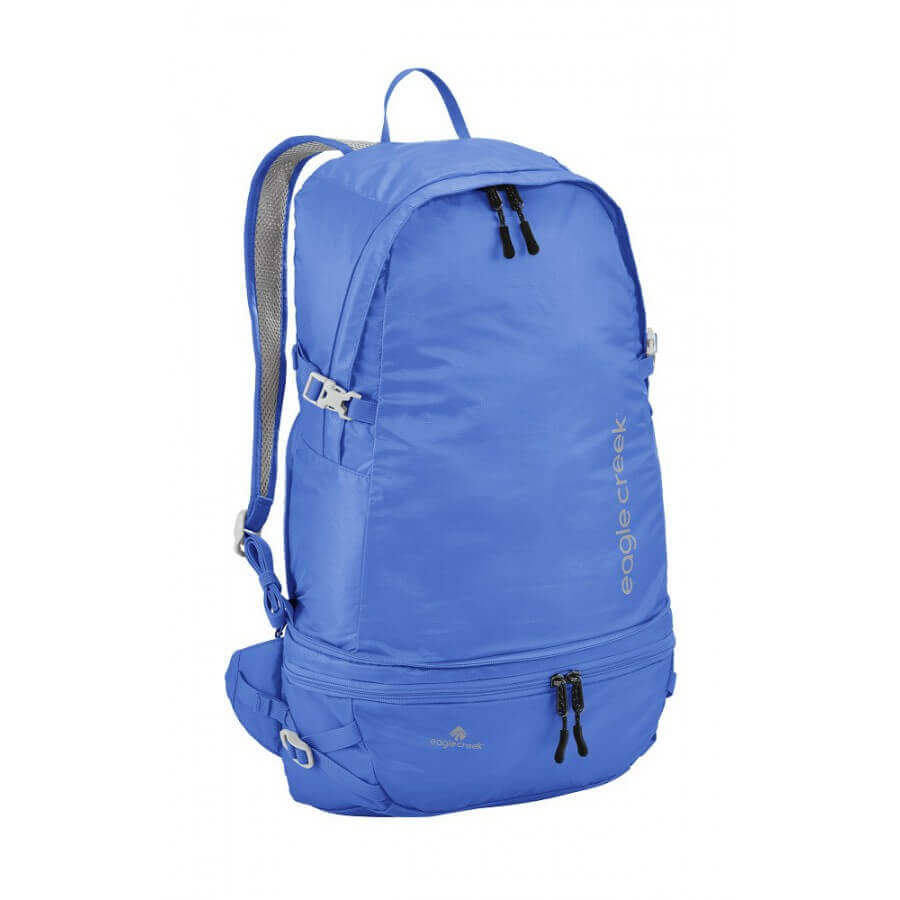
Zip off day pack (can be used for cabin baggage) with internal zip compartment

A zip off pack allows you to take your essentials (minus your Swiss Army Knife ) on the plane. It also doubles as a day pack that you are able to use during the day

Size

A 65 – 75 litre pack will be big enough to take what you need for a long term trip but not too big.

Wheels

Wheels add extra weight and as such are not generally a good idea. For most people doing a long term trip as they are no good on cobbled streets, stairs, snow, dirt tracks (or roads), etc they can become quite cumbersome quite quickly.

Internal compression straps

Internal compression straps are an advantage at times to hold clothes and sleeping bags inside. They can help to reduce the size of your luggage. External straps are more at risk of getting broken.

Uzip

U shaped Zips open like a suitcase providing easy access to your belongings and easier to find what you want. It is not just a small hole at the top and bottom.

Clips

Clips can be used to attach extras such as a tent or something that you do not want inside your pack.

Materials

There are a number of materials used for travel packs.

  • Canvas – The leader in water resistant material
  • Nylon – Is too lightweight, not water resistant and can easily tear
  • Newer synthetic materials – Lighter than canvas but not as water resistant

Double Stitching

Holds together better. Single stitched packs will save small change and make big problems. If your pack starts to come apart, you will need to find a replacement fast as it carries everything you need on your trip.

Luggage Strap

Luggage Straps can be an advantage but are not an essential feature.

Cost

Your travel pack is an investment. Buying a poor quality travel pack may be the worst mistake you make in your trip. It can turn a good trip into a bad experience.


However, not everyone thinks the same about back packs. See what Steve Climber thinks about backpacks


Travel Money Tips

travel money tips
Travel money

Strategic Guide: Managing Travel Currency

Effective currency management is essential for any traveler. By preparing in advance, you can minimize fees, secure better exchange rates, and ensure constant access to your funds.

Cash Handling and Exchange

  • Verify Rates: Only use exchange services that display both “buy” and “sell” rates. This transparency allows you to calculate the fee spread. If rates are hidden, check XE.com to establish a fair market baseline, then account for a modest service margin.
  • Negotiate: In areas with multiple currency exchange kiosks, shopping around and haggling is standard practice and can reduce your costs by 5% to 10%.
  • Choose Wisely: Avoid airport and hotel exchange counters, which typically offer the poorest rates. Instead, seek out established, independent money changers.
  • Plan Ahead: If your home currency is declining, consider exchanging funds before your trip. When abroad, exchange money in countries with lower labor costs to reduce commission fees.
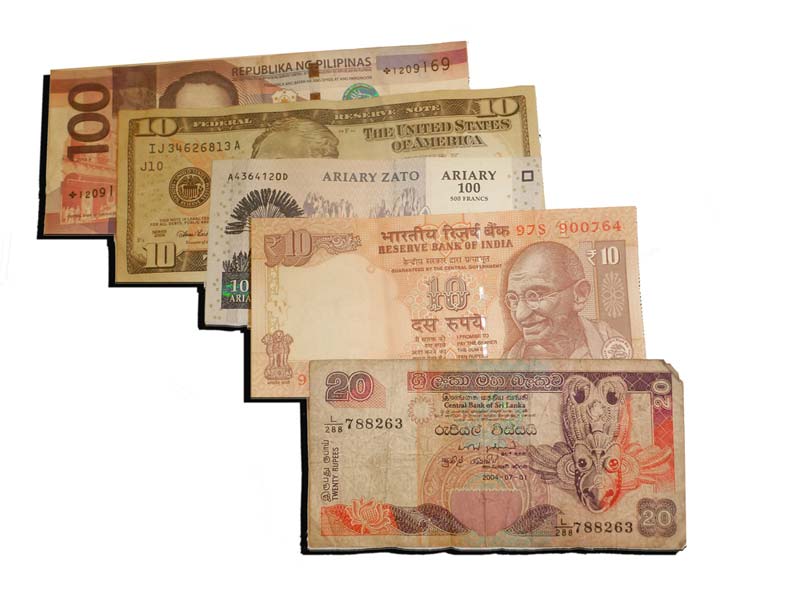
  • Currency Mix: Carry a variety of major currencies (e.g., USD, GBP, EUR, AUD, CHF) alongside your home or host-country currency.
  • Note Integrity: Only accept crisp, clean, and undamaged banknotes. Worn or marked currency is often rejected by vendors, and you should always remain vigilant for counterfeit bills.
  • Consolidate Transactions: Process fewer, larger exchanges to minimize cumulative service fees.
  • Legal Warnings: Avoid “black market” exchange services. Using them is often illegal and can lead to fines, legal action, or deportation. Additionally, always check the legal limits for importing or exporting currency in your destination country.

ATM Strategy

  • Accessibility: While ATMs are reliable in developed regions, availability in developing countries may be limited to airports or major capital cities.
  • Maximize Value: Fixed transaction fees make small withdrawals expensive. For example, a $4 fee on a $100 withdrawal costs 4%, whereas the same fee on a $1,000 withdrawal is only 0.4%. Always withdraw the maximum allowable amount.
  • Strategic Tools: Use mobile apps like ATM Hunter or ATM Finder to locate machines, or ask your bank about partner networks that offer lower international fees. Some institutions, such as Charles Schwab (USA) or Halifax Clarity (UK), offer accounts that waive international ATM and transaction fees.

Digital Payments and Cards

  • Credit/Debit Usage: Use cards for large purchases to benefit from better exchange rates. Avoid using them for small transactions, where fees may outweigh the convenience.
  • Currency Selection: When a terminal asks if you want to pay in your home currency or the local currency, always choose the local currency. This prevents the vendor’s processor from applying an unfavorable exchange rate.
  • Security: Notify your bank of your travel dates to prevent your cards from being flagged or blocked due to unusual activity.
  • Modern Alternatives: Research digital banking options like Revolut, which offers competitive rates and low-fee transactions for many currencies. Prepaid travel cards (such as the Travelex Multi-Currency Cash Passport) allow you to lock in rates, though you should verify any setup or inactivity fees first.
  • Traveler’s Cheques: These are outdated and difficult to exchange. It is recommended to avoid them entirely.
  • Emergency Wiring: In emergencies, services like Western Union or MoneyGram provide secure options for receiving funds from home.

The Value of the Experience

Travel can involve minor financial risks, but these are often outweighed by the value of the experience. Most destinations are safer than media reports suggest, and local advice is usually the best guide for navigating new environments. While traveling to unconventional locations may present challenges, proper preparation will allow you to navigate them confidently.

Is that you Yoda? Philippines travel

A Fascinating Philippine Travel Experience

Of the 7,000 islands in the Philippines, the province of Bohol stands out for its rich culture and natural wonders.

My journey began on a Wednesday at 4:00 PM. As I stepped out of the Tagbilaran ferry terminal, I was greeted by the lively energy of local drivers. Eager to dive into the local culture, I skipped the taxis and hopped into a traditional Boholano tricycle.


1. Faith on Wheels in Tagbilaran

A Boholano tricycle is a unique sight—a motorcycle fitted with a passenger sidecar. These vehicles are surprisingly practical, featuring a rear luggage compartment and a canopy to shield both the driver and passengers from the elements.

As we navigated the streets, my driver pointed out a fascinating local rule: by law, every tricycle must display a scripture or biblical quote on its rear panel. The space was once used for commercial ads, but after some controversial campaigns sparked public concern, the local government replaced them with these messages to promote a more wholesome community spirit.


2. Geological Wonders: The Chocolate Hills

The next morning at 7:00 AM, a black sedan picked me up from my accommodation to begin our day. Our first stop was the iconic Chocolate Hills, an extraordinary landscape of thousands of symmetrical, cone-shaped mounds.

Originally called the “Carmen Hills” after the nearby town, the site was later rebranded as the “Chocolate Hills.” The name highlights how the lush green grass turns a rich, brown color during the dry season—a branding move that turned it into a world-famous attraction.


3. Conservation in the Mahogany Forest

Our route took us through the Bilar Man-Made Forest, a stunning two-kilometer stretch of densely planted mahogany trees. This project is vital for the local environment:

  • Soil Stabilization: The deep root systems help prevent erosion and landslides along the highway.
  • Wildlife Sanctuary: The thick canopy offers a safe habitat for local animals.

We made a quick stop to enjoy the cool air, where we were lucky enough to spot a massive 18-centimeter millipede—a clear sign of the forest’s thriving ecosystem.


4. Encountering the Elusive Philippine Tarsier

Philippines tarsier

We passed by vibrant green rice paddies and towering coconut palms before arriving at our final stop: a wildlife sanctuary.

This protected area is home to the Philippine Tarsier, one of the smallest primates in the world. They are so tiny that an adult can comfortably fit in the palm of your hand. Beyond their size, their most striking features are their massive, soulful eyes, which give them an uncanny, delightful resemblance to Yoda from Star Wars. Seeing these delicate, nocturnal creatures in their natural home was the perfect end to an unforgettable day.